

Shockwave Therapy for Plantar Fasciitis: An Effective Treatment Option
Shockwave Therapy for Plantar Fasciitis
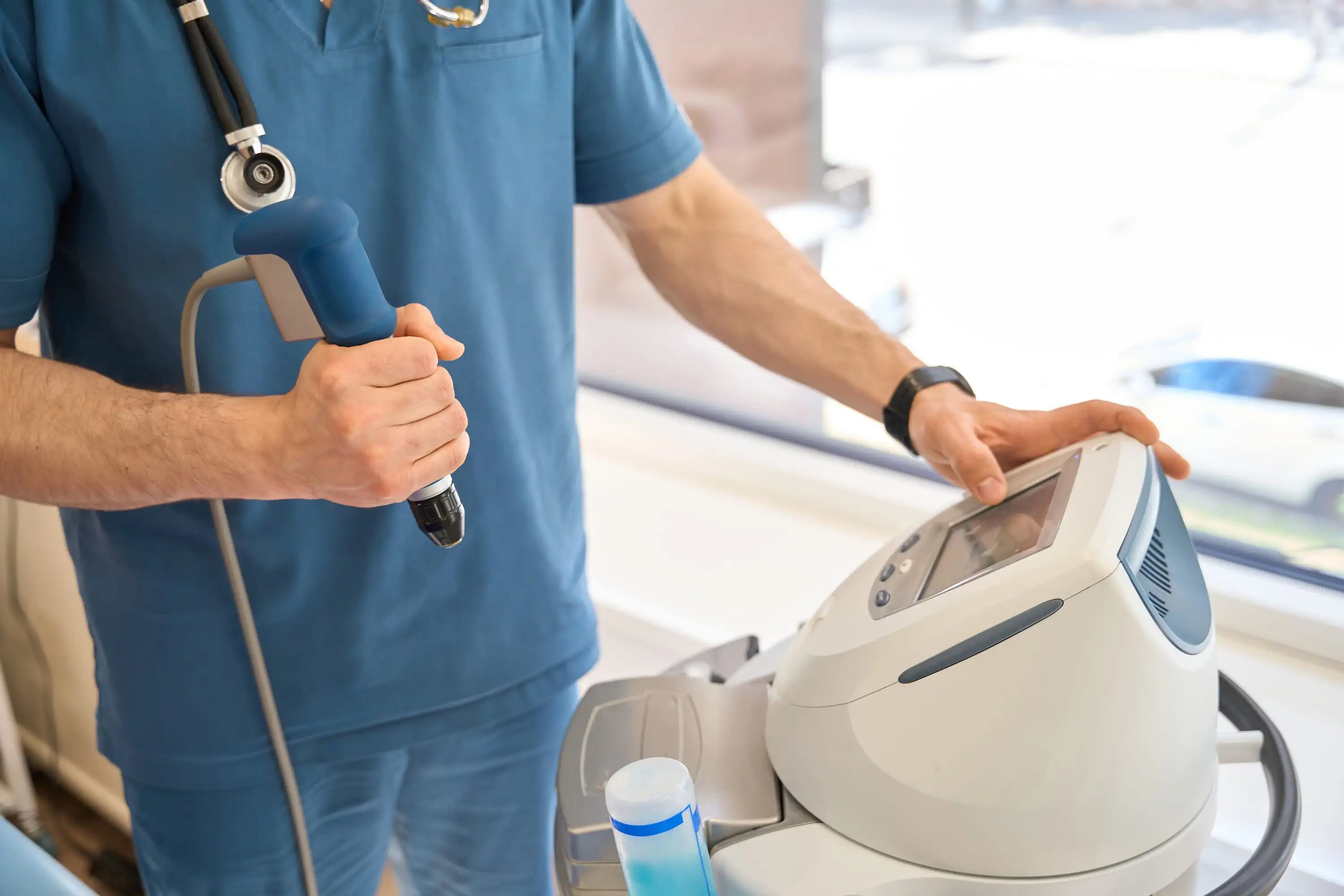
Shockwave Therapy for Plantar Fasciitis: An Effective Treatment Option
Extracorporeal Shock Wave Therapy (ESWT) for Plantar Fasciitis
ESWT is a non-invasive treatment option for chronic plantar fasciitis that uses acoustic energy to stimulate the healing process. Below is a comprehensive overview of how shockwave therapy works, its effectiveness, and other important considerations for this treatment.
How It Works:
- Mechanism of Action: ESWT is thought to promote healing by:
- Promoting Neovascularization: Stimulates the formation of new blood vessels, improving blood flow and nutrient delivery to the affected area.
- Stimulating Tissue Repair: Activates cellular processes that rebuild and regenerate damaged tissues, such as the plantar fascia.
- Reducing Pain: Potentially through mechanisms like modulating pain perception or activating pain relief pathways.
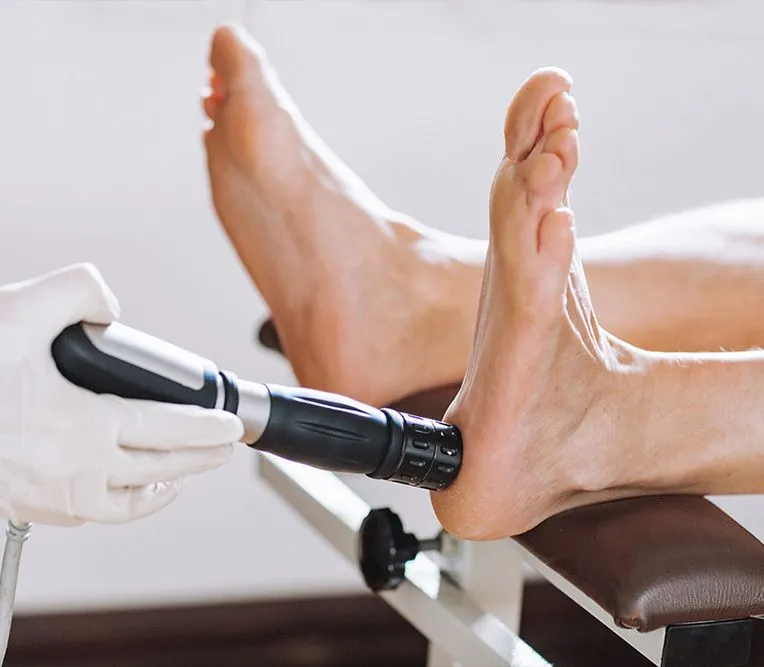
Procedure:
The patient lies comfortably with their heel exposed.
Ultrasound gel is applied to the heel to enhance shockwave transmission.
A handheld device delivers compressed air pulses (shockwaves) to the affected area.
The treatment session typically lasts 15-20 minutes.
Effectiveness and Considerations:
Studies Show: ESWT is considered effective, particularly for chronic plantar fasciitis that hasn’t responded to other treatments.
Success Rates: Research suggests symptom relief in 44% to 80% of patients, with pain reduction observed after 4 sessions.
Possible Side Effects: Mild pain, bruising, swelling, and temporary numbness may occur. However, serious adverse effects are rare.
Recovery: Most patients can walk immediately after treatment and return to normal activities soon after, although improvements may take weeks to months to fully develop.
Combined Approach: Combining ESWT with physical therapy can enhance results and potentially shorten recovery time.
Cost and Insurance:
ESWT treatments can be expensive, and insurance coverage for the procedure can vary. It’s recommended to check with your insurance provider before undergoing treatment.
In Summary:
ESWT is a promising, non-invasive treatment option for plantar fasciitis, especially for chronic cases. While it may not work for everyone, studies indicate it can significantly reduce pain and improve function. Consulting with a healthcare professional will help determine if ESWT is suitable for your condition.
Things to Know About Treatment Duration:
How Long Does Shockwave Therapy Take to Work for Plantar Fasciitis?
Shockwave therapy can provide both immediate and long-term pain relief. Here’s a breakdown of what you can expect:
Immediate Relief: Some patients report a numbing sensation or pain reduction immediately after the first treatment session.
Early Relief: Many people experience improvement in their symptoms within a few weeks of starting treatment.
Long-Term Results: The full effects of shockwave therapy, such as freedom from chronic pain and increased mobility, may take several months to fully manifest.
Treatment Course: Most patients undergo a series of 3-6 shockwave therapy sessions, typically spaced out over several weeks.
Individual Variation: Recovery time varies depending on the severity of the plantar fasciitis, individual healing rates, and other factors.
Maintenance: After the initial treatment phase, some patients may benefit from occasional follow-up sessions to maintain long-term pain relief.
Shockwave Settings:
Shockwave therapy for plantar fasciitis typically uses a hand-held probe to deliver high-energy sound waves to the affected area, targeting the heel and surrounding tissues. Treatment parameters vary, but generally involve:
Frequency: 10-15 Hz
Pressure: 3-4 bar
Impulses: Typically 1800 impulses per session, although some studies may use more or fewer.
Elaboration:
Frequency: Studies have used frequencies ranging from 10 Hz to 15 Hz.
Pressure: Pressure levels have been adjusted between 3 and 4 bar.
Impulses: The number of impulses per session can vary, with some studies using 1800 impulses, while others use different numbers, such as 2000 or 400.
Target Area: The treatment is directed to the painful area of the heel, specifically targeting the plantar fascia and surrounding tissues.
Pain Tolerance: Some studies suggest that the maximum tolerable energy density, determined by the patient’s pain tolerance, may be a more effective treatment protocol than a fixed energy density.
What is Plantar Fasciitis?
Plantar fasciitis is a common cause of plantar heel pain in patients. It is a condition where the plantar fascia ligament becomes irritated, inflamed, thickened, and very painful. The plantar fascia is a strong and fibrous structure that runs along the base of the foot, connecting the heel bone to the toes at the ball of the foot. Its purpose is to assist with distributing forces and weight as a person walks, and to support the arch of the foot.
Causes: Plantar fasciitis is usually the result of overuse or repetitive strain on the plantar fascia ligament. It occurs most commonly in females, middle-aged individuals, people whose occupations require standing for extended periods, those with either flat feet or high arches, and people who engage in a lot of running and walking.
Symptoms: Plantar fasciitis causes a characteristic sharp, stabbing pain at the plantar aspect of the heel (the part where the ligament attaches to the heel bone). Most commonly, patients report that the pain is worse in the mornings when they get out of bed or after a period of rest.
Is Shockwave Therapy for Plantar Fasciitis Painful?
While some patients may experience slight pressure or discomfort, the treatment is generally not painful. Shockwave therapy typically lasts around five minutes per session, and most patients tolerate it well. If discomfort occurs, it’s important to communicate it to your practitioner. The intensity of the treatment can be adjusted and gradually increased over the course of sessions.
How Many Sessions of Shockwave Therapy for Plantar Fasciitis Are Required?
Since the effect of shockwave therapy is cumulative, multiple sessions are typically required. Most patients undergo 3-6 sessions, with sessions generally spaced one week apart. Many patients experience some pain relief after just one session. Your practitioner will determine the exact number of sessions you require based on the severity of your condition.
Consultation and Next Steps
If you have been diagnosed with plantar fasciitis or are dealing with persistent heel pain, shockwave therapy could be an effective non-surgical solution. For more information or to schedule a consultation, contact Mark Kowalski, D.C. at 614-798-8050 or visit Kowalskichiropractic.com.
👇👇👇
Watch the Video on Shockwave Therapy for Plantar Fasciitis on YouTube